
28+ reviews
  • 4.3
228+ reviews

How Much Does Excavation Cost in 2026? A Homeowner's Price Guide

  • June 20, 2026
  • Site preparation & grading

Ask five contractors what excavation costs and you'll get five different answers — because the honest answer is "it depends on what's under your grass." Still, the numbers aren't a mystery. In 2026, most residential excavation jobs in the US land between $1,500 and $6,500, while a big dig like a full basement runs $12,000 to $30,000.

This guide breaks down real 2026 prices by project type — grading, footings, basement digs, trenching, and land clearing — then walks through the five site conditions that decide whether your quote comes in at the low end or blows past the high one.

The short answer: what excavation costs in 2026

Excavation contractors price work one of two ways: by the hour or by the job. Hourly rates in 2026 run $150 to $250 for a machine with an operator, and most companies carry a half-day minimum, so even a small job rarely comes in under $500 to $800.

For anything beyond a couple hours of digging, you'll get a fixed bid instead. That bid bakes in machine time, labor, hauling, and fuel — which is why two identical-looking projects can carry very different price tags.

2026 prices by project type

Here's where typical jobs land this year. These are national ranges — expect the high side in metro areas and the low side in rural markets with cheap dump sites nearby.

One caution: rock removal, demolition, and haul-off are often separate line items. Always ask what the number includes.

  • Grading and leveling: $0.50 to $2.50 per square foot. Regrading a typical yard for drainage runs $1,000 to $4,500; a simple building pad can be less.
  • Footings: $12 to $25 per linear foot dug to frost depth. A 40 x 60 shop — about 200 linear feet of footing — is roughly $2,500 to $5,000 in digging alone.
  • Basement digs: $12,000 to $30,000 for a full basement on a new build. The underlying math is $15 to $20 per cubic yard excavated and hauled, and a 2,000 sq ft basement moves 600-plus yards of dirt.
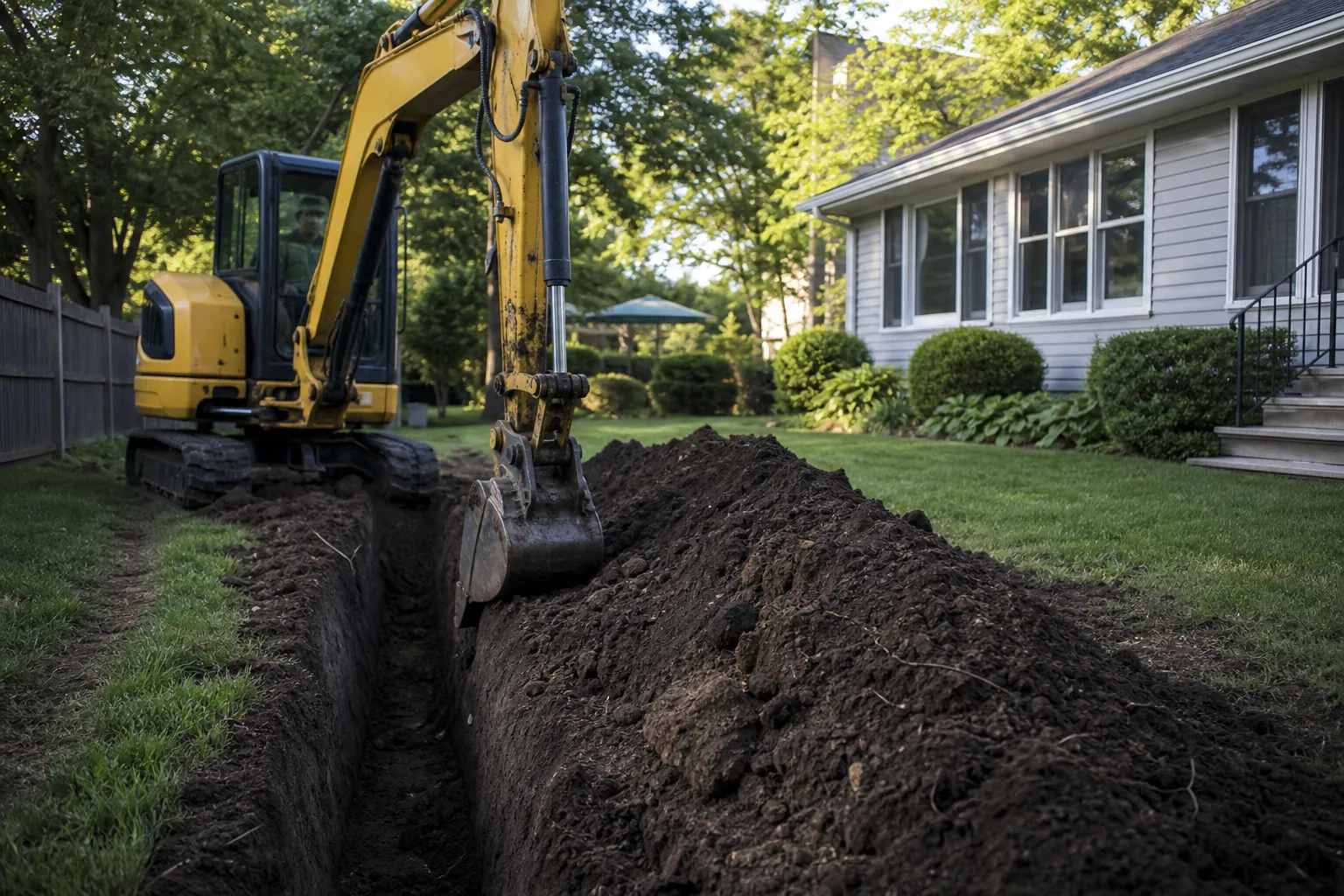
  • Trenching: $5 to $12 per linear foot for water, power, or drainage lines at standard depths. Rocky ground or 6-foot-plus depths push that to $25 or more.
  • Land clearing: $1,500 to $4,000 per acre for brush and small trees; $4,000 to $10,000-plus per acre for heavily wooded lots where stumps have to come out.

The five factors that swing your quote

Two neighbors can get quotes 50 percent apart on the same project. These five site conditions are almost always the reason.

  • Soil type: Sandy loam digs fast. Heavy clay is slower and sticks to everything, adding 10 to 30 percent. Hit rock ledge and you're into hydraulic breakers — that can double or triple the price.
  • Site access: If a full-size excavator and dump trucks can drive right up, you get the efficient rate. Tight side yards, fences, and slopes force smaller machines that move a fraction of the dirt per hour.
  • Haul distance: Getting spoils off-site costs $10 to $20 per cubic yard, and that number climbs with every mile to the nearest fill site. On big digs, hauling can be a third of the bill.
  • Groundwater: A high water table means pumps, possible shoring, and weather delays. Contractors who've dug in your neighborhood usually know before the shovel does — ask.
  • Permits: Most towns charge $100 to $500 for grading or trenching permits, plus inspections. Not huge money, but skipping them can stall a project for weeks.

How to get a bid you can trust

Don't accept a phone-only estimate for anything bigger than a short trench. A contractor who walks the site can check access, probe the soil, and spot drainage problems — that visit is what turns a guess into a real number.

Ask for line items. Excavation, hauling, backfill, compaction, and permits should each be visible on the bid. And call 811 before any digging so utilities get marked — it's free, and it's required in every state.

Also be honest about which parts aren't a rent-a-mini-excavator weekend. Trenches deeper than 5 feet legally require protective systems, and digging near foundations or gas lines has real consequences when it goes wrong — that's the part a licensed contractor like Acme Excavation should handle, while you save the DIY energy for the landscaping afterward.

Five ways to keep the price down

None of these are exotic. They just take a little planning before the machine shows up.

  • Keep the dirt on site. If spoils can be spread or bermed on your property, you erase most of the hauling line.
  • Bundle projects. One mobilization fee ($200 to $600) covers the trip — dig the trench, the pad, and the drainage swale in a single visit.
  • Clear the path yourself. Moving fences, patio furniture, and low branches before the crew arrives saves billable hours.
  • Ask about off-season scheduling. Late-fall and winter bids often run 10 to 15 percent lower where ground conditions allow.
  • Get three site-visit bids — not to grind the price, but to spot the outlier who missed something.

The bottom line

Budget $1,500 to $6,500 for typical residential excavation in 2026, $5 to $12 per foot for trenching, and $12,000-plus if a basement is involved. Then let the five factors — soil, access, hauling, groundwater, permits — tell you which end of the range is yours.

Get the site visit, get the line items, and the number on the bid stops looking like a mystery.

Free download: Excavation Project Prep Checklist 23 checks that keep your dig on time and on budget — permits, 811, access and contract terms.

Dealing with an excavation project?

We'll handle your excavation quickly, safely and effectively. Just arrange a free no-obligation quote – we'll take care of the rest.
Looking for a company to help you with excavation of all kinds?